

From the Grand Canal to Charner Boulevard
Before it became one of Ho Chi Minh City's most recognisable streets, the Nguyen Hue area was once occupied by a waterway known as the Grand Canal, or Charner Canal, connecting the Saigon River with the former Gia Dinh citadel area.
The evolution of the street reflects the transformation of central Saigon itself — from a canal and transport corridor to a colonial boulevard, a commercial district and eventually a modern public square.
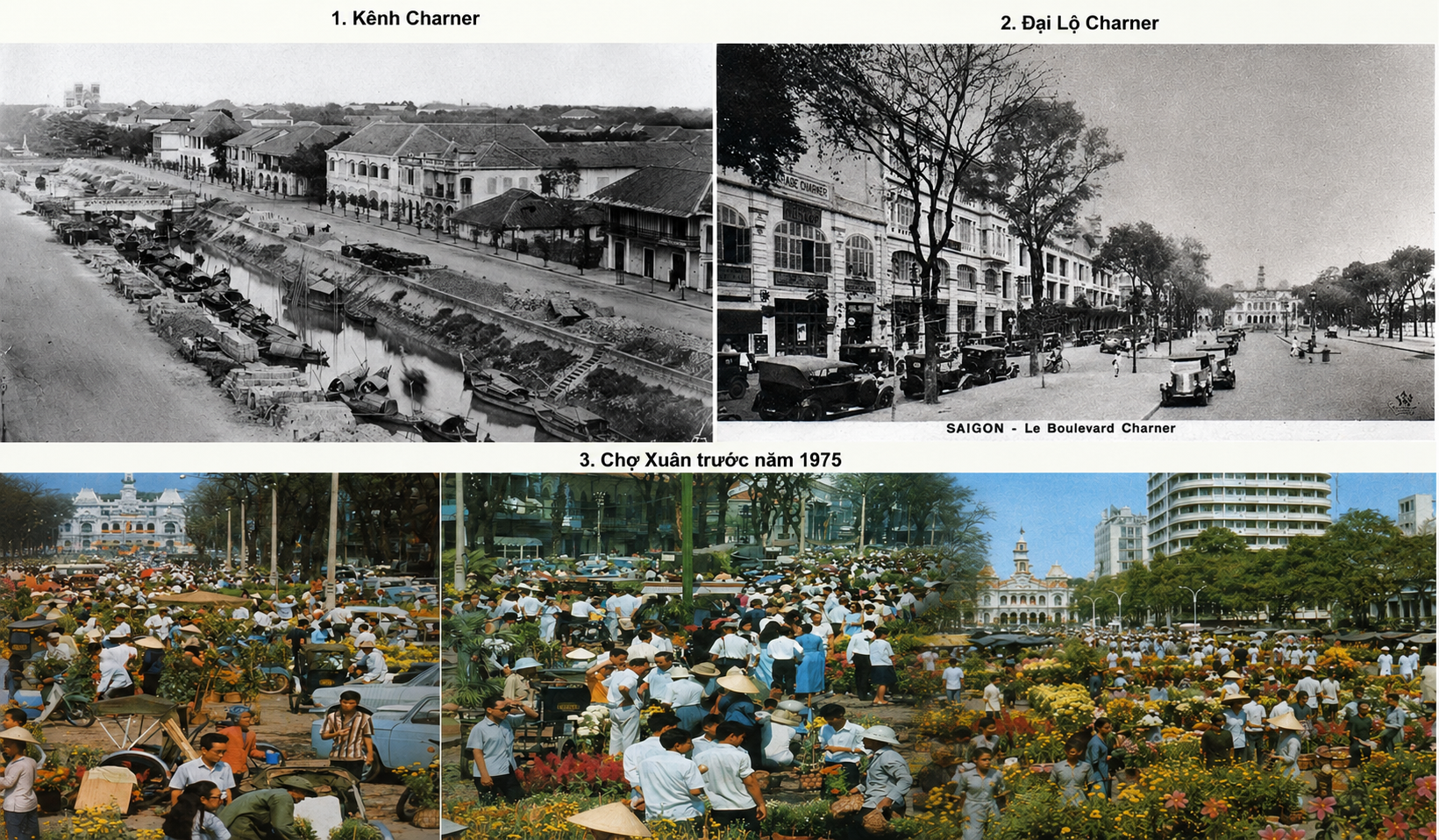
2015: Nguyen Hue Becomes a Modern Pedestrian Boulevard
In 2015, during the 40th anniversary of national reunification, Nguyen Hue underwent a major redevelopment and was transformed into a pedestrian street. The project marked an important shift from traffic corridor to public space, creating a large urban square in the very heart of the city.
From Traffic Boulevard to the City's “Living Room”
The boulevard was redesigned with granite paving, water features, landscaping and a new lighting system. Its long visual axis stretches from Ho Chi Minh City Hall toward the river, giving the boulevard a strong civic and urban identity.
From the Ho Chi Minh statue in front of City Hall, look down Nguyen Hue toward Bach Dang Wharf. The perspective clearly reveals the relationship between the civic centre and the Saigon River.
An Urban Square That Changes from Day to Night
Nguyen Hue today is more than a place for walking. It is a stage for cultural activities, public events, street performances and the everyday rhythm of central Ho Chi Minh City.
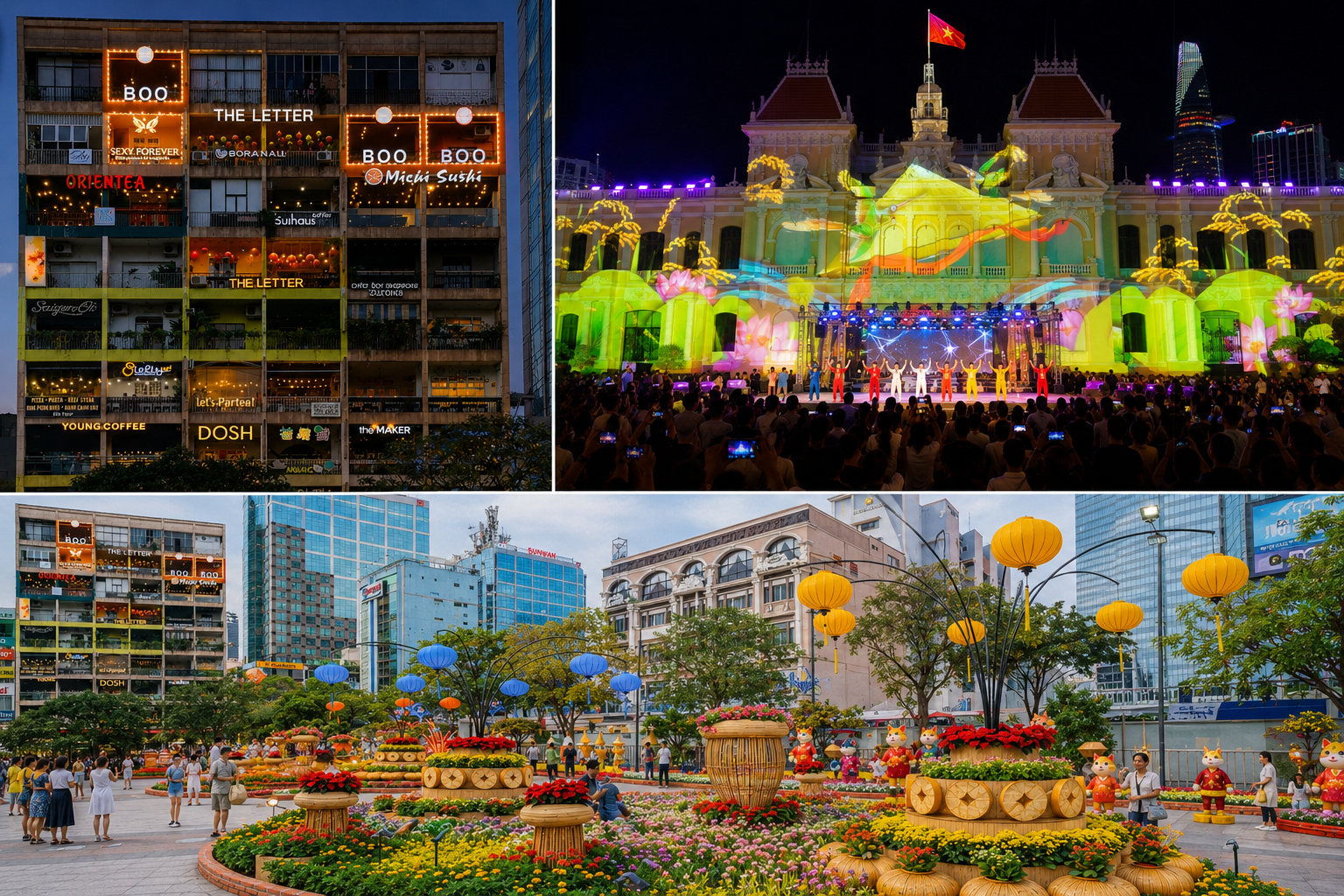
Music, street performances and large-scale public events give Nguyen Hue a different atmosphere from one evening to the next.
This old apartment building has been transformed by cafés, small shops and balconies overlooking the full length of the walking street.
Toward the river, the modern skyline and Bitexco Financial Tower create an interesting contrast with the older architecture nearby.
Continue to the end of Nguyen Hue and the urban square opens directly into the riverside landscape along the Saigon River.
What Is the Best Time to Visit Nguyen Hue Walking Street?
Daytime is better for observing architecture and the overall urban layout, but Nguyen Hue is often at its most enjoyable once the city begins to light up. After around 6:00 PM, the temperature becomes more comfortable, cafés and shops become livelier and the boulevard shifts naturally into the city's evening rhythm.
An evening on Nguyen Hue does not need much planning.
Start with a slow walk, choose a café with a balcony, try a local drink or snack and continue toward Bach Dang Wharf. On weekends and during major events, the area can become significantly busier and temporary traffic restrictions may apply depending on the event programme.
A café in one of the buildings along the boulevard offers a completely different perspective: the crowds, tree lines, lighting and the way Nguyen Hue connects with the central skyline.
An Afternoon-to-Evening Walking Route Through Central Saigon
One of Nguyen Hue's advantages is that it does not need to be treated as a standalone attraction. With a free afternoon and a comfortable pair of shoes, you can connect several different sides of the city centre in one easy walking route.
From the Civic Centre to the Saigon River
Stay Close to the Centre and Experience Nguyen Hue at Your Own Pace
When you stay in the central districts, Nguyen Hue can become part of your everyday route rather than a destination that requires a separate plan. Visit in the afternoon, return after dark, or continue on foot toward Ben Thanh, nearby museums and the city's heritage streets.
CityHouse MARK El Pino Realm
Located in the Ben Thanh area opposite the Ho Chi Minh City Museum of Fine Arts, with convenient access to Ben Thanh Metro Station, Ben Thanh Market and the walking route toward Nguyen Hue.
Explore El Pino RealmCityHouse VIBE Abora
A relaxed central stay for guests who want to combine Independence Palace, historic landmarks and a slower exploration of central Saigon.
Explore VIBE Abora
Stay Closer and Experience More of Central Saigon
Explore CityHouse stays across Ho Chi Minh City and choose the right base for a business trip, short city break or a few slower days discovering the city from a more local perspective.
Find Your StayIs Nguyen Hue Walking Street Worth Visiting?
Nguyen Hue is worth visiting not simply because it is one of the city's best-known public spaces. Its real appeal lies in how it connects several layers of Saigon: Charner Canal, memories of the Tet flower market, historic architecture, street culture, the modern skyline and the Saigon River. A single evening walk is often enough to understand why Nguyen Hue has become one of Ho Chi Minh City's defining urban spaces.


