

History Is Sometimes Preserved in the Smallest Objects
From copper coins under imperial dynasties to banknotes, wartime currency and modern polymer notes, each period reveals a different way in which the state organised the economy and expressed sovereignty. Many of those traces can still be read directly on the money itself: reign titles, national names, portraits, landmarks, symbols and production techniques.
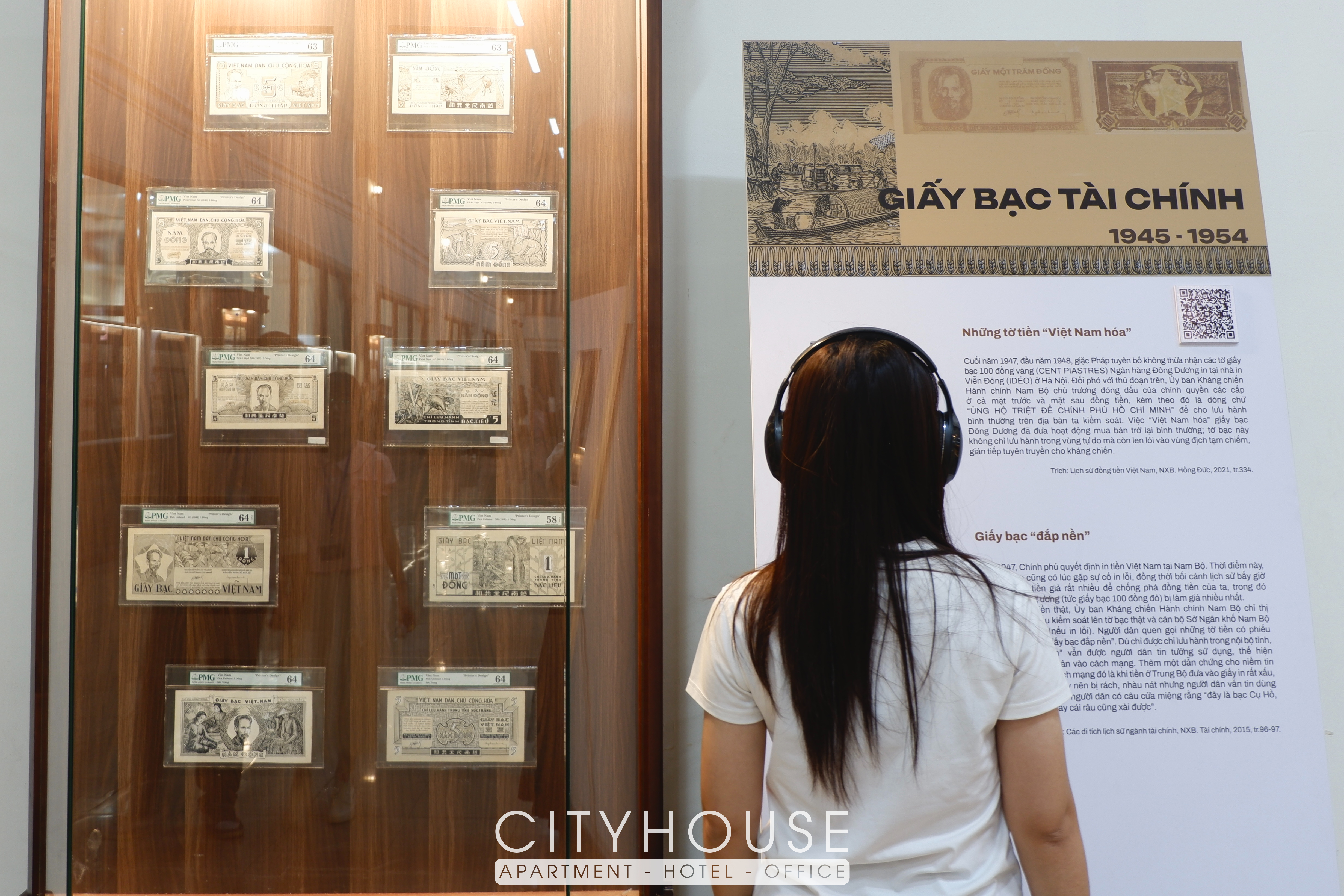
The ability to mint or issue currency has long been connected with state organisation and national sovereignty.
Copper, zinc, gold, silver, cotton paper and polymer all reflect the technological conditions and circulation needs of their time.
Historic sites, landscapes, portraits and decorative motifs reveal what each period chose to represent on its currency.
Around 970: Dai Co Viet Began Minting Its Own Currency
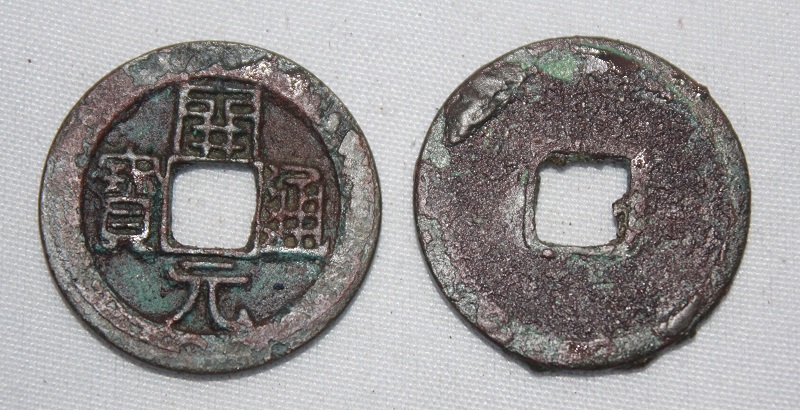
After Dinh Bo Linh unified the country and founded Dai Co Viet in 968, the Dinh dynasty began consolidating the state. According to historical chronicles and museum records, around 970 Emperor Dinh Tien Hoang ordered the minting of Thai Binh Hung Bao — widely regarded as the first official coin proactively minted and circulated by an independent Vietnamese feudal state.
Round Coin, Square Hole and Chinese Characters
The coin followed a familiar East Asian monetary form of the time: a round body, square central hole and Chinese characters on the face. Some examples bear the character “Dinh” on the reverse, giving the issue a distinctive dynastic mark.
Thai Binh Hung Bao marked an important step in the financial autonomy of the independent state, but in actual commerce, coins from Chinese dynasties and other forms of money could continue to circulate alongside it.
Under the Early Le dynasty, the court continued minting coins such as Thien Phuc Tran Bao. From this point onward, placing reign titles and state authority on currency gradually became a familiar feature of Vietnamese monetary history.
1396: An Early Experiment with Paper Money in Vietnamese History
Thong Bao Hoi Sao is often referred to as “Ho dynasty paper money”, but when it was first issued in 1396, the Tran dynasty was still formally in power. At that time, Ho Quy Ly held substantial authority at court and was pushing a series of reforms; he would not establish the Ho dynasty until 1400.
Thong Bao Hoi Sao paper money was printed and introduced into circulation, while the court required copper coins to be exchanged for paper notes.
Different denominations featured motifs such as waves, clouds, tortoises, qilin, phoenixes and dragons.
It is the earliest paper currency recorded in Vietnamese history, reflecting an ambitious monetary reform at the end of the fourteenth century.
The policy of forcing exchanges from copper coins to paper money and restricting metallic currency faced considerable practical difficulties. Thong Bao Hoi Sao is therefore better understood as a significant and controversial monetary reform rather than simply a technological advance.
When Money Moved Beyond Everyday Payment
During the Nguyen dynasty, alongside currency used in circulation, there were also reward coins, commemorative pieces and monetary objects crafted from gold, silver and other precious materials. Some were large, elaborately engraved and decorated with classical references, auspicious phrases or imperial poetry.
These objects should not be understood as ordinary circulating money. They represent another world of currency in which symbolism, ritual, reward and courtly aesthetics were often as important as face value.
This period also makes clear that monetary history is not simply the history of buying and selling. Money could serve as a reward, a symbol of authority or a medium for preserving the aesthetics and ideas of a dynasty.
From 1946: Currency for a Newly Independent State
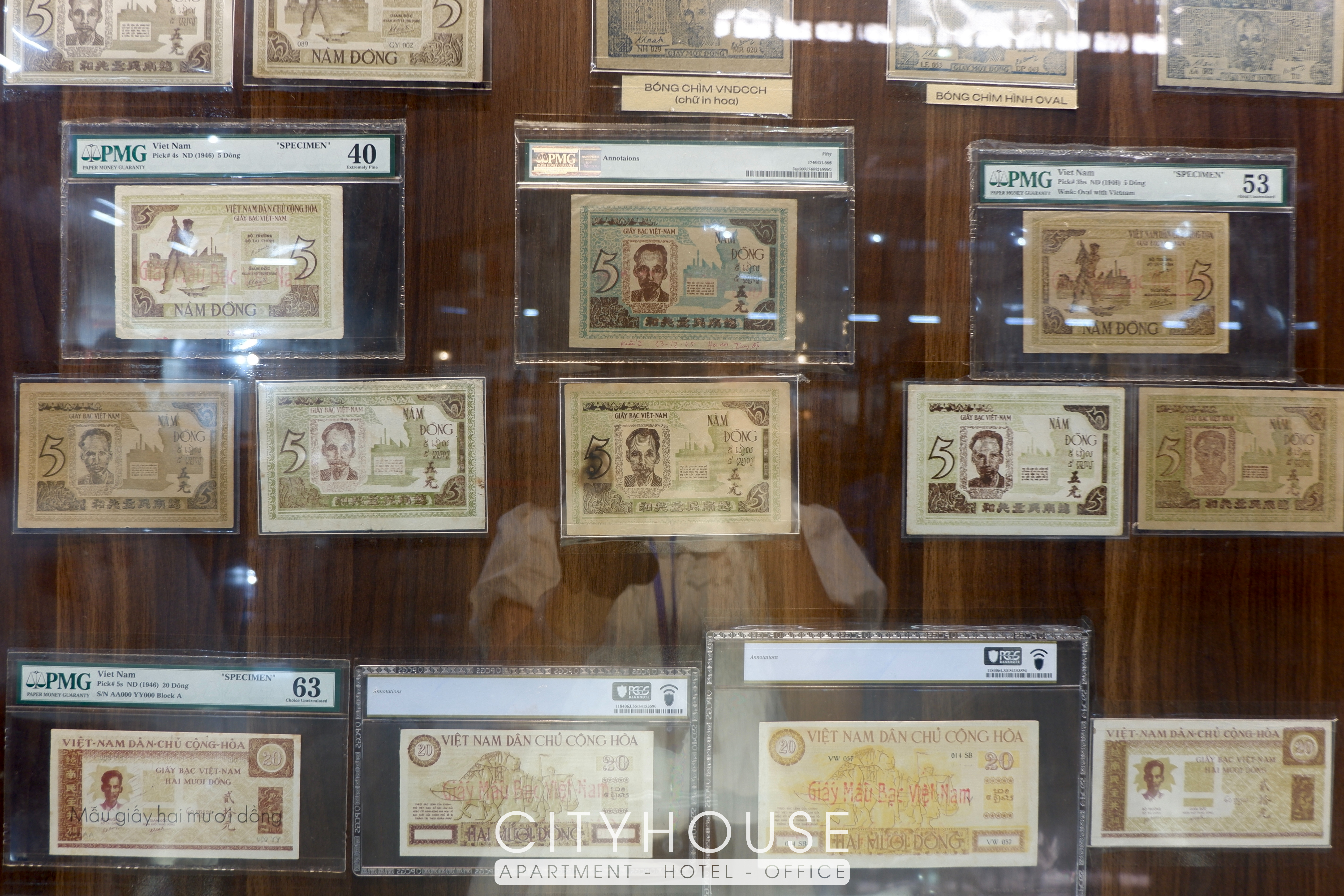
After the August Revolution of 1945, the Democratic Republic of Vietnam had to establish its own financial and monetary system under extremely difficult conditions. In 1946, Vietnamese banknotes organised and issued by the Ministry of Finance began appearing in various regions. Because many featured President Ho Chi Minh, they became popularly known as “Giay Bac Cu Ho” or “Tien Cu Ho” — literally “Uncle Ho banknotes” or “Uncle Ho money”.
Currency and Trust in a New Government
Amid war and severe shortages of materials, printing, transporting and circulating banknotes became part of the effort to build an independent financial system. The imagery on money therefore carried strong political and symbolic meaning.
During the resistance years, different financial notes and regional certificates circulated in different areas. The popular phrase therefore refers to a broader story about finance and money during the early years of the new Vietnamese state.
From 2003 to 2006: A New Series Was Introduced Gradually
Vietnam began issuing polymer banknotes at the end of 2003 with the VND 50,000 and VND 500,000 denominations. Other polymer denominations were added in later years; by August 2006, the VND 10,000 and VND 200,000 notes had entered circulation, completing the familiar six-note polymer group used today.
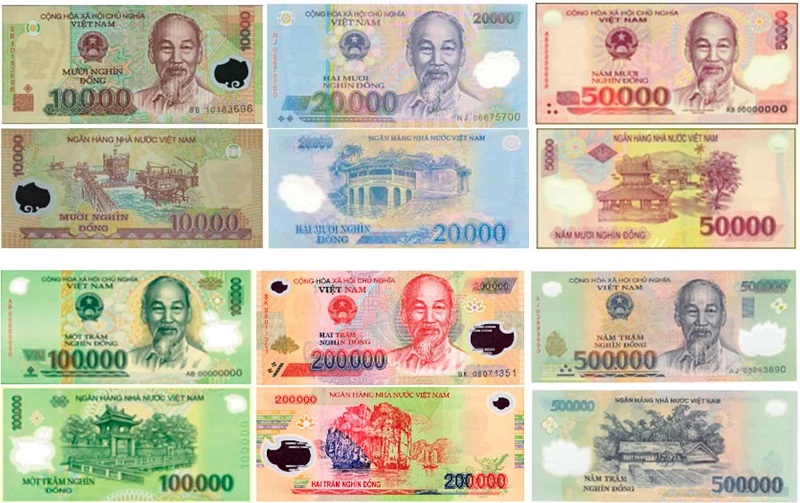
The reverse depicts oil and gas extraction, reflecting an important sector of Vietnam’s modern economy.
A familiar image of Hoi An’s urban heritage and its long history of international trade.
Two landmarks associated with the heritage landscape of the former imperial capital of Hue.
An image associated with Vietnam’s traditions of education, scholarship and classical learning.
One of Vietnam’s most internationally recognisable natural landscapes.
The image depicts the home associated with President Ho Chi Minh’s birthplace in Kim Lien.
The material supports multiple security features, resists water and performs well in a hot, humid climate. The transition was also connected with improving anti-counterfeiting protection and the overall quality of cash in circulation.
Three Things to Notice before Looking at the Face Value
Portraits, national emblems, buildings and landscapes reveal what has been chosen to represent the nation.
Material, transparent windows, printing techniques and security elements reflect the technology of each period.
A new currency issue is often connected with changes in government, economic reform, circulation needs or anti-counterfeiting measures.
Seen this way, a VND 20,000 note is more than a means of payment. It simultaneously carries an image of Hoi An, polymer printing technology, national symbolism and a monetary-policy decision from the early twenty-first century.
Quick Facts about the History of Vietnamese Currency
According to historical chronicles and museum records, Thai Binh Hung Bao, ordered by Emperor Dinh Tien Hoang around 970, is generally regarded as the first official coin of an independent Vietnamese feudal state.
The paper money was first issued in 1396, when the Tran dynasty still formally existed and Ho Quy Ly already held substantial power at court. The Ho dynasty was only founded in 1400, so calling it “Ho dynasty paper money” is common but requires that chronological context.
Vietnamese banknotes featuring President Ho Chi Minh began to circulate in the period after the August Revolution, with important issues starting from 1946.
Polymer notes began entering circulation in December 2003, with additional denominations introduced gradually through 2006.
No. The six commonly used denominations from VND 10,000 to VND 500,000 are polymer, while some smaller denominations remain in cotton-paper or coin form within the monetary system.
The reverse designs draw from cultural heritage, history, natural landscapes and economic achievements, adding a layer of national storytelling alongside the notes’ practical function.
A Thousand Years of History Can Fit in the Palm of Your Hand
From Dinh dynasty coins to modern polymer banknotes, the history of Vietnamese currency reflects changes in sovereignty, technology and national imagery. Sometimes, understanding a place can begin with something very small that we use every day.
Explore Places to Stay in Ho Chi Minh City


