

Not All Five “Landmarks” Were Transformed — but the City Centre Did Go through a Noticeable Period of Renewal
The original article was published on 3 February 2026, just before the Tet holiday, when several urban-improvement projects were being completed quickly for residents and visitors. After the holiday, the picture is clearer: Ben Thanh Market and Turtle Lake showed the most visible changes; Independence Palace retained its established architectural character; the Central Post Office continued operating as usual; and Notre-Dame Cathedral remained under major restoration.
Seasonal decorations, flags and festive elements shown in photographs belong to the early-2026 period. The landmarks themselves remain visitable throughout the year, although construction status, opening hours and visitor rules may change.
The roof, walls, pavements and several surrounding details were renewed quickly in January 2026.
The improvement programme began on 21 January and was largely completed in early February 2026.
A year-round landmark best known for the design of architect Ngo Viet Thu.
Two newly gilded crosses were reinstalled on the cathedral towers on 19 March 2026.
Ben Thanh Market: a Refreshed Appearance, Not a Major Reconstruction
Ben Thanh Market
The clock tower at the South Gate remains one of the clearest visual symbols of central Saigon.
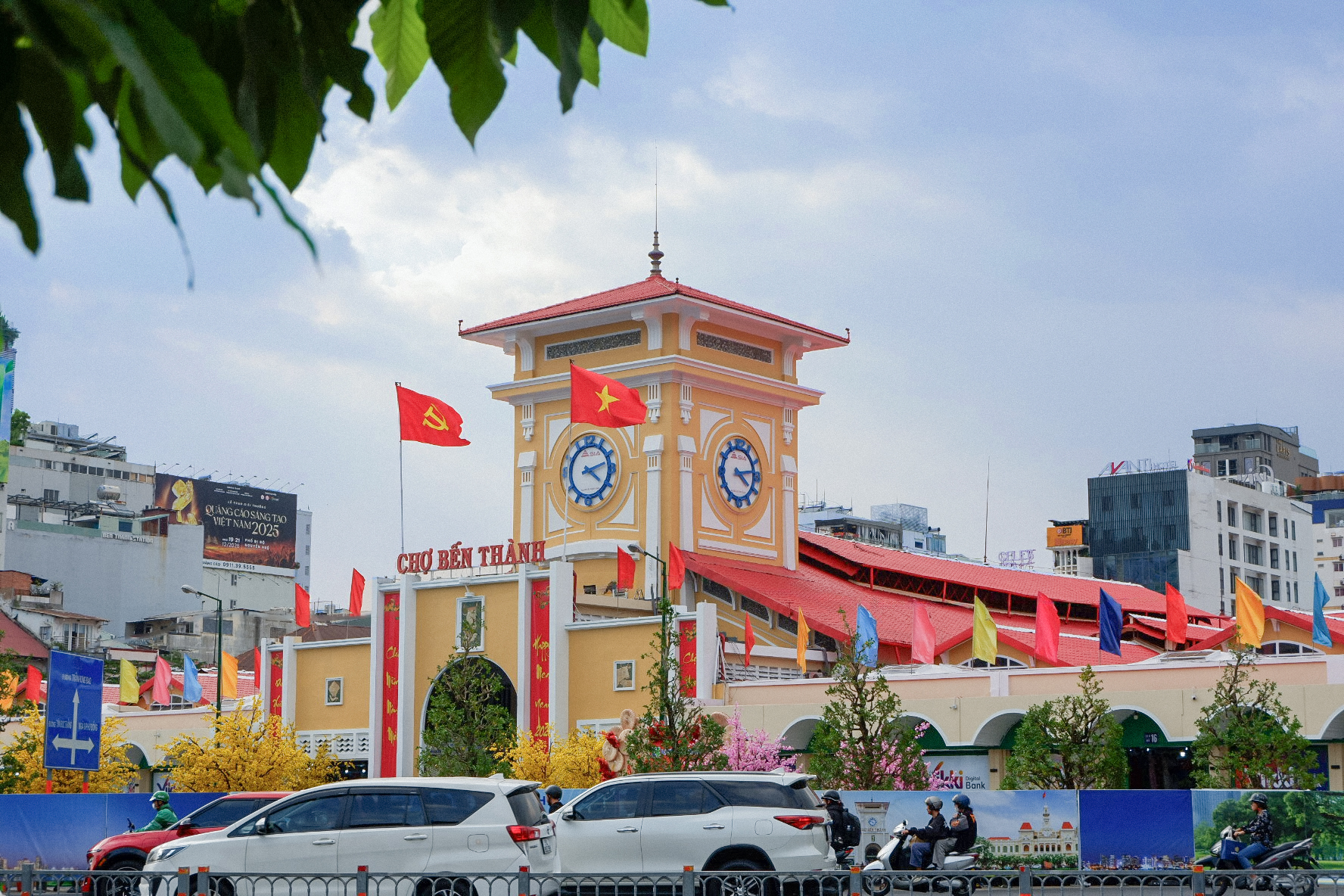
In January 2026, Ben Thanh Market underwent a quick pre-Tet refresh: the red roof tiles became visually more prominent again, wall surfaces were repainted, and parts of the pavements and road markings around the market were improved.
For that reason, “refreshed appearance” is more accurate than describing the work as a major restoration. The market’s architecture and role in central city life remain the more important story.
Beyond the familiar South Gate, walk around the market to see how it connects with Quach Thi Trang Square, Ben Thanh Metro Station and Le Loi Boulevard. This part of the city has changed considerably in recent years.
A Public Space Renewed to Feel Brighter, Cleaner and Easier to Use
Turtle Lake
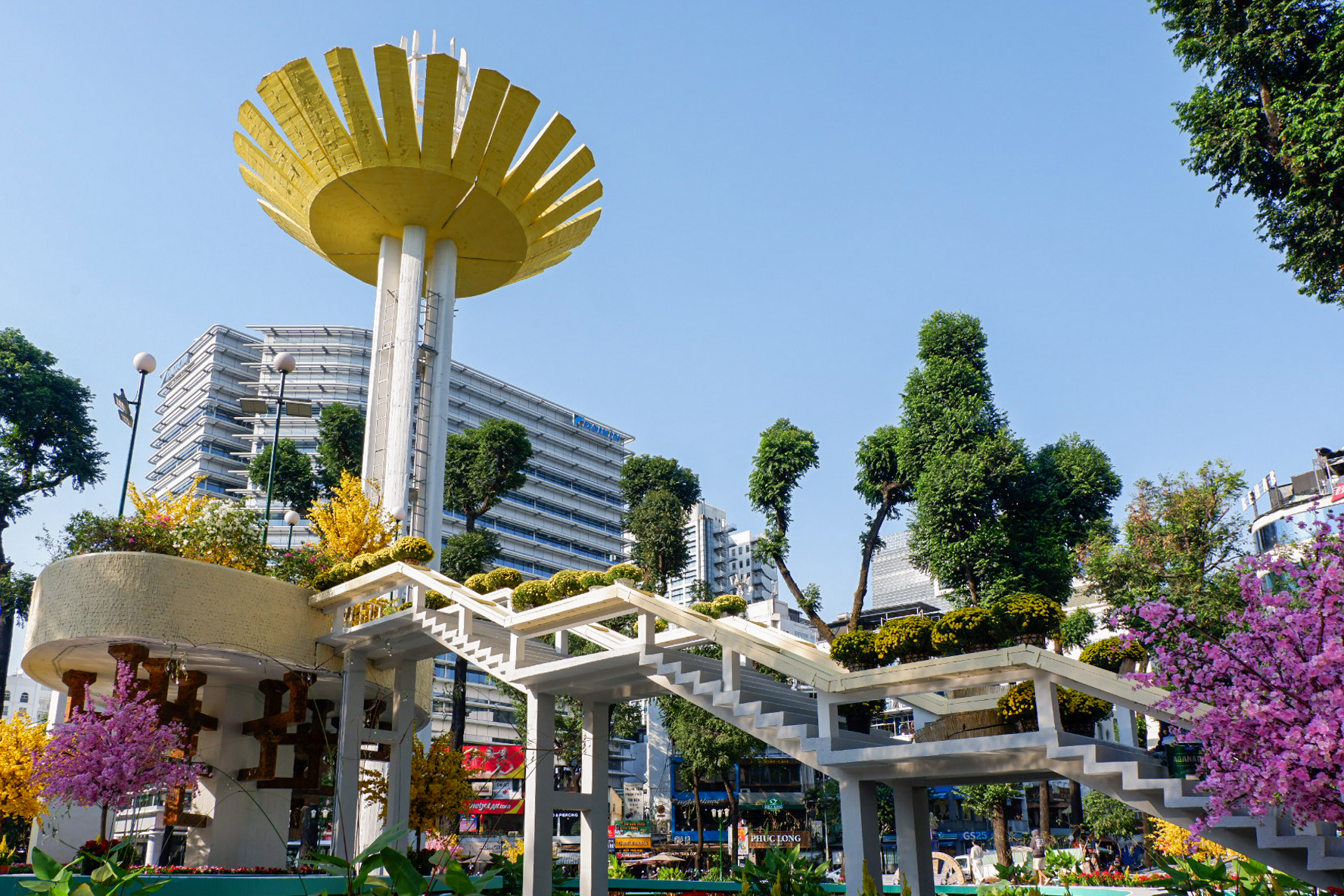
A familiar urban roundabout shared by generations, between Vo Van Tan, Pham Ngoc Thach and Tran Cao Van.
The pre-Tet 2026 improvement programme began on 21 January and was largely completed after just over ten days. The published objective focused on improving the appearance and safety of one of the city’s most recognisable public spaces.
The older version of the article called it an “island of light” with interactive LED systems. That description was more promotional than the available evidence supports. A more useful way to experience Turtle Lake is to notice the difference between daytime — trees, water and surrounding cafés — and the livelier evening atmosphere.
It Does Not Need Seasonal Decoration to Remain One of the Most Important Architectural Spaces in the Centre
Independence Palace
A building where twentieth-century history meets the language of Vietnamese modern architecture.
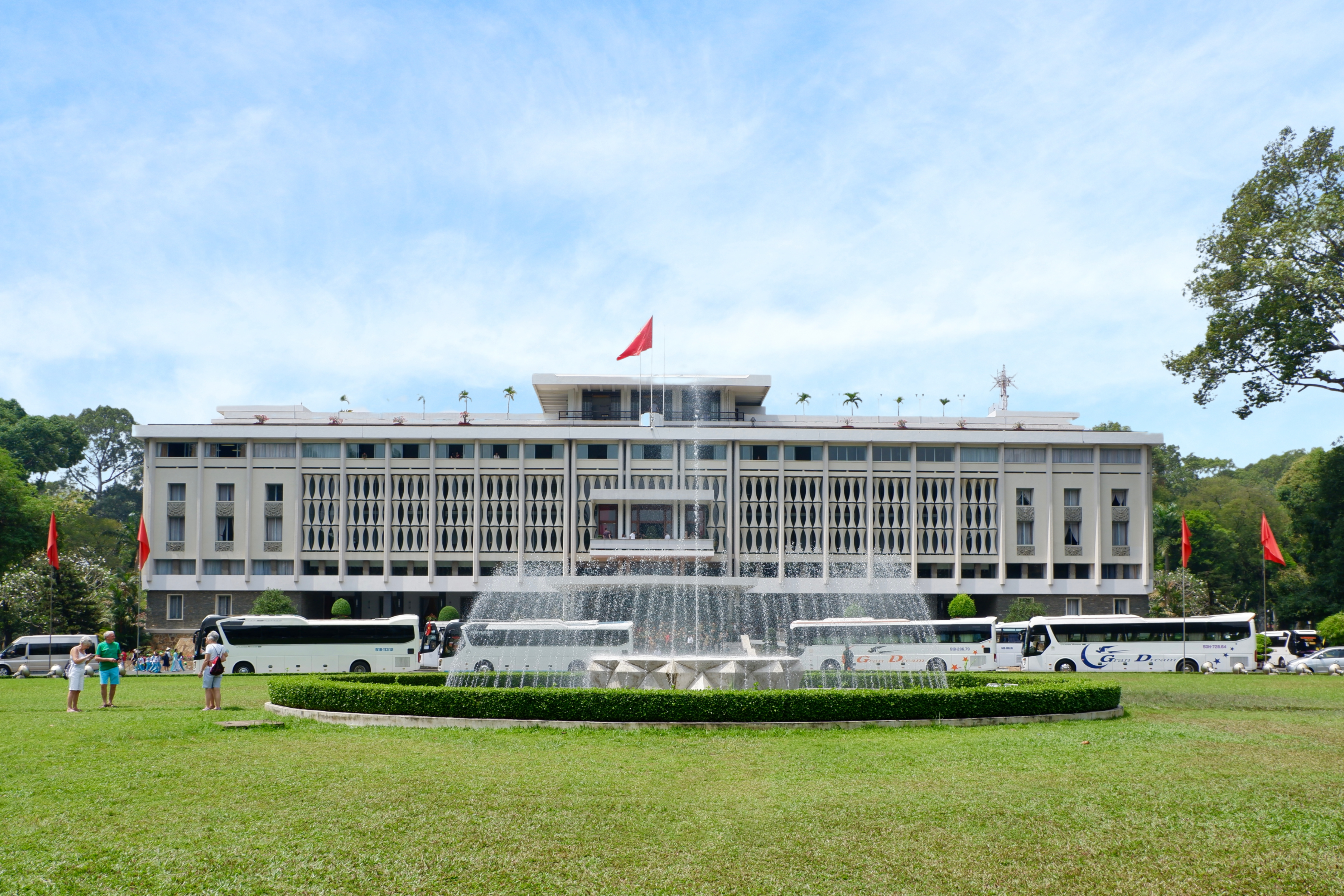
The appeal of Independence Palace does not depend on a seasonal “makeover”. Designed by architect Ngo Viet Thu, the building has its own architectural significance in the treatment of the façade, sun-shading screens, courtyards, interiors and spatial organisation.
For first-time visitors to Ho Chi Minh City, it is worth spending a full morning here rather than stopping only for an exterior photograph. The ceremonial rooms, offices, basement and rooftop help reveal the building as a complete historical structure.
Central Post Office and Notre-Dame Cathedral: Two Neighbouring Landmarks in Very Different Conditions
Central Post Office & Notre-Dame Cathedral
One continues to operate and welcome visitors every day; the other remains in the middle of a long-term restoration.
Saigon Central Post Office remains a functioning public building. When discussing its architecture, it is better to avoid repeating the popular but poorly supported claim that Gustave Eiffel designed it; historical evidence more directly associates the building with Alfred Foulhoux and Auguste Vildieu.
Notre-Dame Cathedral across the square is still under restoration. On 19 March 2026, two newly gilded crosses were returned to the tops of the bell towers, marking an important milestone; however, the restoration as a whole should not yet be described as complete.
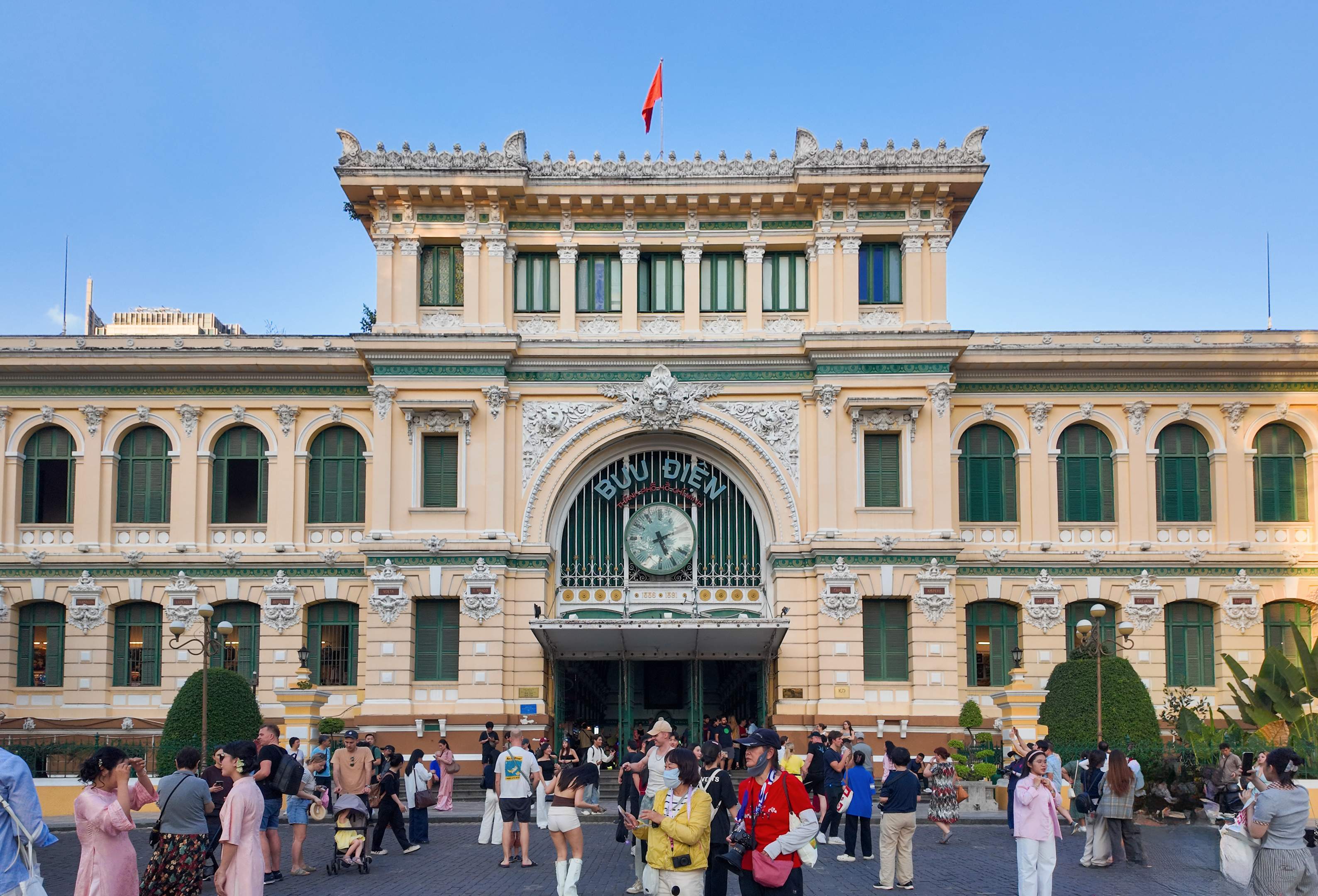
The vaulted ceiling, service counters, historic maps and everyday public use make the building more than an architectural backdrop.
Scaffolding and construction work are part of the current appearance. The newly gilded crosses atop the towers have been a visible milestone since March 2026.
These Four Landmarks Make More Sense as One City Walk Than as Four Separate Photo Stops
Begin at the market, move through the Museum of Fine Arts area or along the central streets, then continue toward Nam Ky Khoi Nghia. This section shifts from commercial space into the city’s administrative and historical core.
Continue via Vo Van Tan or Nguyen Thi Minh Khai to Turtle Lake, taking in the café culture and everyday use of public space.
Walk along Pham Ngoc Thach toward Notre-Dame Cathedral, the Central Post Office and Ho Chi Minh City Book Street. The distance is short, but the concentration of heritage is unusually high.
If you plan to enter Independence Palace or spend time inside the Central Post Office, allow at least half a day. Short walking distances do not mean the experience should be compressed.
CityHouse Is Not the Fifth “Landmark” — It Is the Base from Which to Explore the Right Part of the City
A Good Place to Stay Can Make the City Easier to Read
Rather than placing CityHouse alongside historic landmarks, its more natural role is to provide a base close to the route guests actually want to explore.

For a Ben Thanh – Independence Palace – Turtle Lake – Paris Commune Square route, CityHouse now offers several different ways to stay. Guests can prioritise Ben Thanh, choose Nam Ky Khoi Nghia to sit within the heritage cluster, or stay around Co Giang for a balance between central access and a calmer residential feel.
The goal is not to find one property that is “close to everything”, but to identify where you will actually spend most of your time.
Directly opposite the Museum of Fine Arts, close to Ben Thanh Market and Ben Thanh Metro Station. A strong fit for itineraries focused on Ben Thanh – Nguyen Hue.
Explore MARK El Pino RealmAt 174 Nam Ky Khoi Nghia, convenient for Independence Palace, the War Remnants Museum and the walking route toward Turtle Lake.
Explore VIBE AboraOn Co Giang, another central base for guests who want to connect Ben Thanh with the southern side of the city centre.
Explore NEST LightHouse Saigon
Quick Information about Four Central Ho Chi Minh City Landmarks in Early 2026
It is better not to describe it that way. Before Tet 2026, the market and surrounding area received a quick refresh involving paintwork, roof details, pavements and some landscape elements.
The programme began on 21 January 2026 and was largely completed in early February, before the Tet holiday.
No. The present building is a work of modern architecture designed by Vietnamese architect Ngo Viet Thu and constructed in the 1960s.
That claim should be treated with caution. Historical documentation more directly associates the design with Alfred Foulhoux and Auguste Vildieu.
Not yet. On 19 March 2026, two newly gilded crosses were returned to the bell towers, but the broader restoration is still continuing.
Yes. They can form a central walking route, but if you plan to enter Independence Palace and spend time inside the other landmarks, allow at least half a day rather than rushing between them.
Saigon Changes Layer by Layer, while Familiar Landmarks Continue to Reveal the City’s History
From a market that has just been refreshed to a cathedral still undergoing restoration, the city does not need every landmark to look permanently “new”. The coexistence of old and new is precisely what gives central Ho Chi Minh City its distinctive character.
Explore CityHouse Stays


