

A Day That Does Not Need to Feel Like a Checklist
CityHouse VIBE Abora is located at 174 Nam Ky Khoi Nghia Street, Xuan Hoa Ward, in the central area commonly known as District 3. The location offers a particular advantage: several historic landmarks and familiar urban spaces can be linked on foot instead of requiring a separate ride for every stop.

The stops are connected by short to medium walks, making it easy to explore the city in smaller clusters.
Between museums and historic landmarks are cafés, tree-lined streets, local dishes and the everyday life of the city.
Because the property is nearby, guests can return for a midday break before continuing the itinerary later in the afternoon.
From Morning History to the City’s Early Evening Rhythm
Independence Palace
Begin the day at one of the landmarks most closely associated with modern Vietnamese history. Independence Palace is also notable for the architecture of Ngo Viet Thu, its distinctive concrete sunshades and its large green grounds.
Morning is a more comfortable time to walk around the site before temperatures rise. If you visit the interior, allow extra time for the reception rooms, former offices and command bunker.
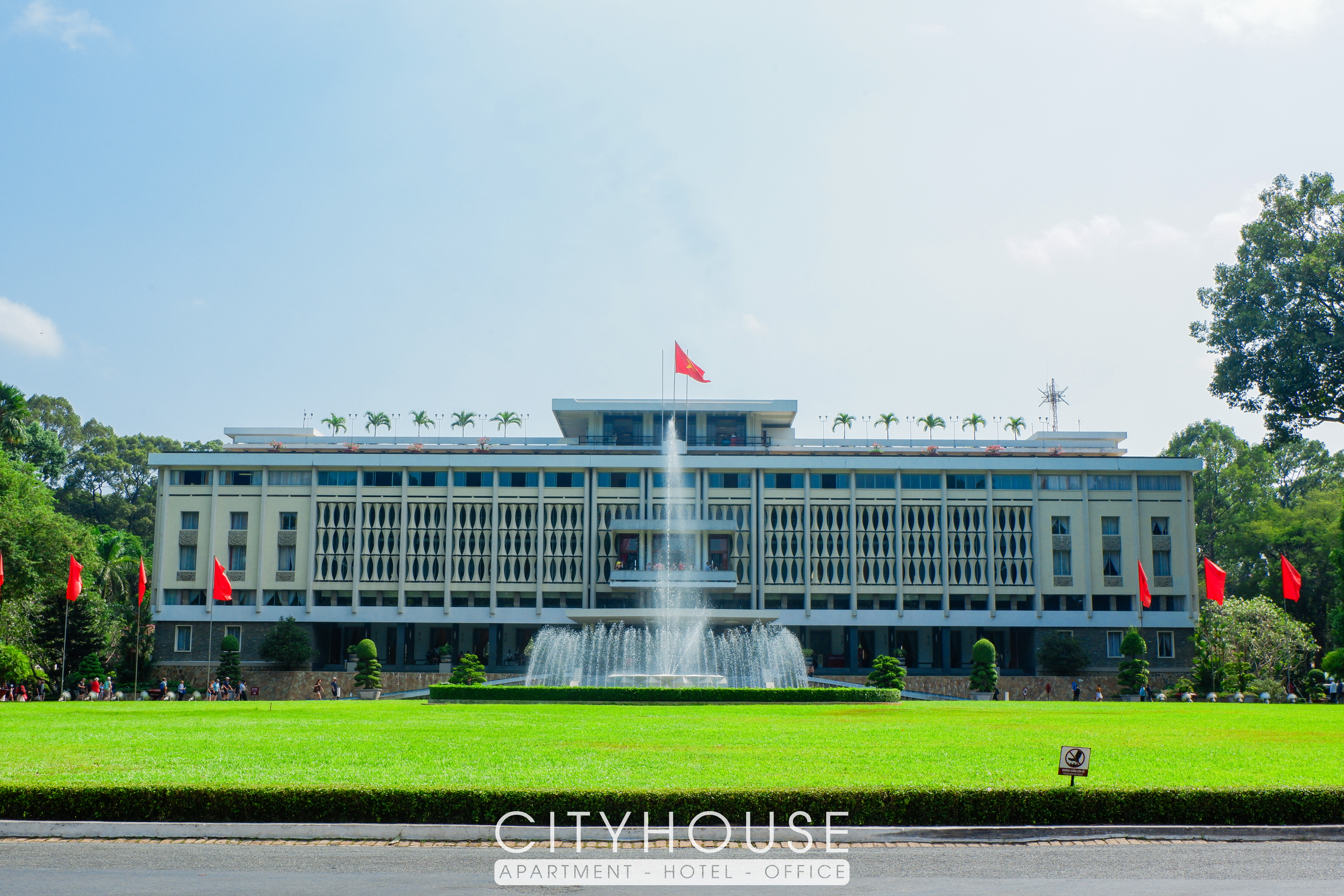
A Green Pause in the City Centre
Independence Palace is more than a historic site. Its trees, open grounds and architectural character make it an easy place to begin a day on foot.
War Remnants Museum
From Independence Palace, continue to the War Remnants Museum. The exhibitions focus on the Vietnam War, its consequences and civilian experiences, presented largely from a Vietnamese perspective.
Some galleries can be emotionally heavy. Rather than moving through quickly, give yourself time to read, observe and take a short pause after leaving the museum.

Not a Place to Rush Through
This is a stop that benefits from time to read and reflect before moving into a lighter part of the day.
Lunch Nearby, Then Return to Abora
Instead of continuing to walk through the strongest midday heat, this is a good time to find a nearby local restaurant for pho, com tam, bun thit nuong or another Vietnamese dish you discover along the way.
After lunch, Abora is close enough to make a short return worthwhile. An hour back in the room can make the rest of the day considerably more comfortable, especially when most of the itinerary is on foot.
Coming back to Abora at midday for a quick shower and a quiet break before heading out again is one of the most practical benefits of staying centrally.
Notre-Dame Cathedral & Saigon Central Post Office
The afternoon continues around Paris Commune Square. Notre-Dame Cathedral remains under restoration in 2026, but the exterior and surrounding square are still worth visiting.
Directly opposite is Saigon Central Post Office, built in the late nineteenth century. Older travel materials often link the present building to Gustave Eiffel, but architectural research more directly associates the existing design with Alfred Foulhoux and Auguste Henri Vildieu.

A Historic Building Still Used by the City
The post office is not simply a sightseeing stop. It still serves its postal function, which makes the experience different from visiting a museum or a preserved monument used only for tourism.
Turtle Lake
End the route at Turtle Lake, a familiar public space surrounded by several tree-lined streets. The area is associated with many urban legends, but what makes it most interesting today is how naturally it remains part of everyday city life.
In the late afternoon and evening, young people gather around the lake for snacks and conversation. After a day centred on history and architecture, it is a fitting place for the itinerary to return to the city’s ordinary rhythm.
A Warm Wood-Toned Home Base for a Day in Motion
Abora does not need to become another “attraction” in the itinerary. Its role is simpler: to provide a comfortable place to pause so guests can continue enjoying the city at their own pace.
A Warm Wood-Toned Space in the City Centre
Abora combines natural wood tones, white walls, terrazzo flooring and generous glazing to create a space that feels clean without feeling cold. It suits the rhythm of a walking day: go out when you want to explore, return when you need to slow down.
The VIBE spirit at Abora is found in enjoying smaller details — daylight in the room, the warmth of wood in the late afternoon, greenery beside the window and the feeling that not every moment needs to be scheduled.
Explore CityHouse VIBE AboraA Few Small Choices Can Make the Route Much Easier
Ho Chi Minh City is hot for much of the year. Longer walking sections are more comfortable in the morning and late afternoon.
Choose breathable, flat shoes suited to several hours of walking on urban pavements.
If it rains or you feel tired, skip a stop and return to Abora. A slow day does not need to include everything.
Actual travel time depends on entrances, the route you take, weather and walking speed. For sections that feel less convenient, ride-hailing remains an easy alternative.
Quick Information for a Day Exploring from Abora
Abora is at 174 Nam Ky Khoi Nghia Street, Xuan Hoa Ward, Ho Chi Minh City, in the central area commonly known as District 3.
Yes. These are two of the closest stops in the itinerary and are suitable for walking when the weather is comfortable.
The cathedral remains under restoration in 2026. Visitors can still see the exterior and surrounding square, but should check current interior access before visiting.
Gustave Eiffel is often mentioned in popular travel literature, but historical architectural sources more directly associate the present building with Alfred Foulhoux and Auguste Henri Vildieu.
No. The route is only a suggestion. Spend longer at a museum, take a longer midday break or skip a stop if that makes the day more comfortable.
Stay Close to the City. Enjoy Every Moment.
A warm wood-toned room, tree-lined streets and a day explored on foot — Abora is a starting point for experiencing Saigon at a slower pace.
Explore VIBE Abora


